Shanti Valley

ZeměIndia
OblastBaba Budan Giri
FarmaShanti Valley
Nadmořská výška1035 - 1300 MASL
Velikost farmy
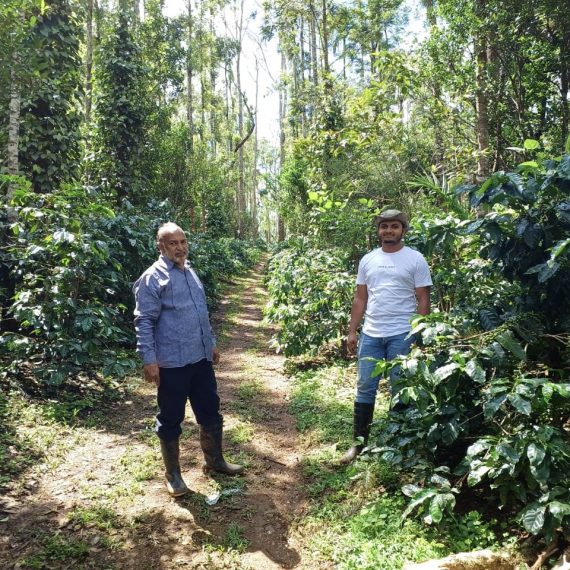
Shanti Valley Estate, with more than 100 years of heritage is located in Mallenahalli, Chikmagalur and currently managed by the 4th Generation of the family.
The soil measures above average levels of carbon, nitrogen, phosphorus and potassium which is an indicator for good plant health. It is home to more than 66 species of birds, 40 species of butterflies, and 11 types of wildlife mammals.
Apart from coffee, Shanti Valley boasts of more than 20 other varieties of fruit bearing, medicinal plants and trees.
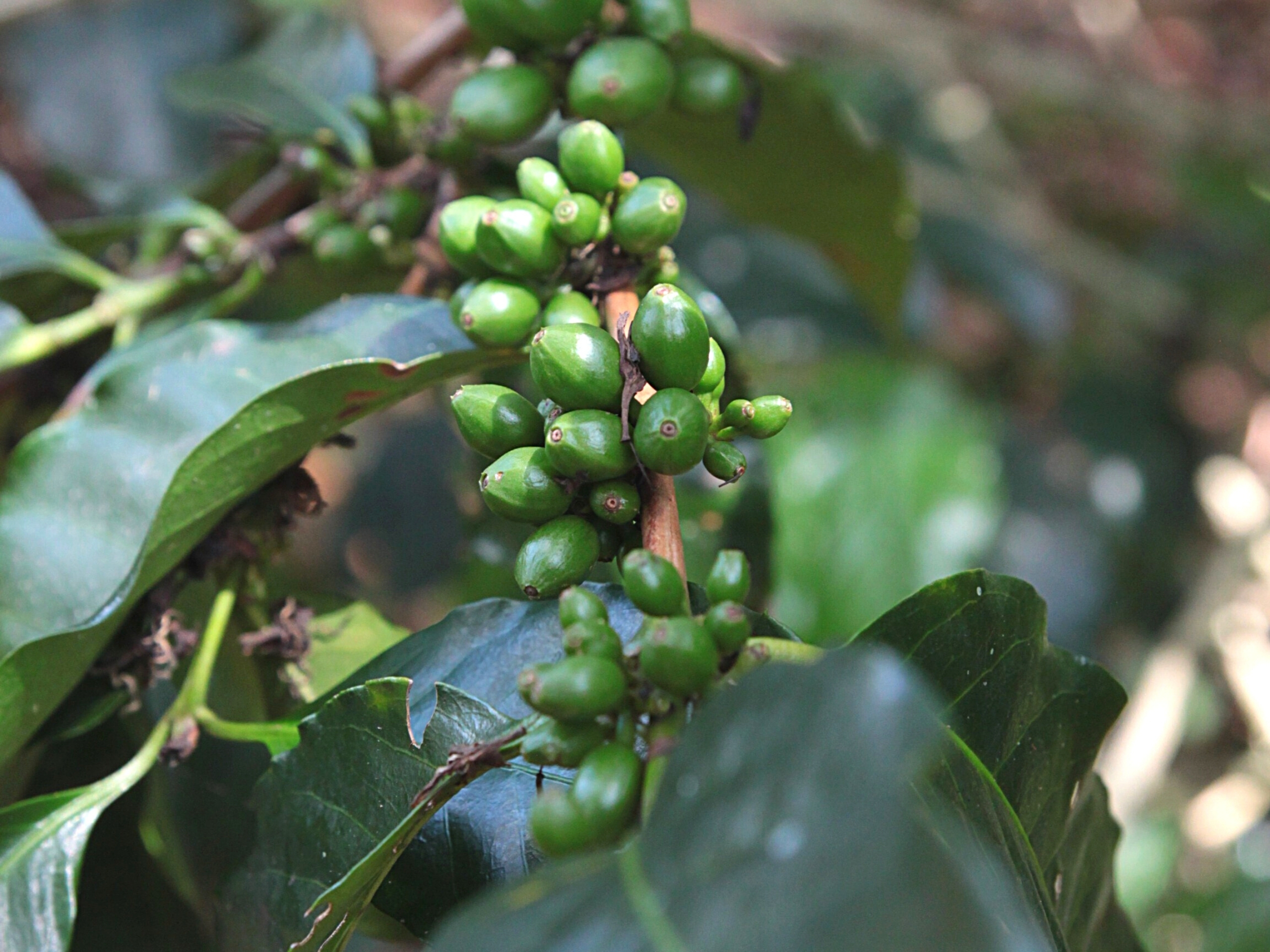
The farm is located at the foot of Bababudan Giri hill in Chikmagaluru at an altitude starting from 3400 ft to 4250 ft above sea level. The farm primarily grows Arabica coffee, cultivars being S-795, HDT Catuai, Cauvery and Chandragiri.
Coffee is Shade-grown, hand-picked and mountain-fresh.
The coffee, fruits and spices are grown in harmony with the existing environment at the Plantation. Indigenous spices, fruit and jungle trees provide shade to the coffee and provide a unique flavour. The primary source of water is the rainfall, which is channelized into the coffee area for optimum use. There is also a natural stream flowing through, and a man-made lake on the plantation.
A part of the plantation is irrigated. 50 % of the fertiliser used in the plantation is organic and this compost is prepared on the farm itself. Minimum or no use of fungicides & no pesticides have been used since the last 5 years.
PROTECTION OF WILD ANIMALS
KaadKaapi is a collective in South India which keeps animals free to move and passage in the countryside and around farms.
It supports long-term sustainability by working with farmers in Chikmagalur and Coorg districts to implement wildlife-friendly cultivation methods, providing financial and advisory support, and ensuring access to premium international markets. This approach benefits both wildlife conservation and local farmers economically.
Traditional coffee agroforests in this region help preserve local biodiversity by providing alternative habitats for wildlife. However, market changes and rising cultivation costs are driving farmers towards practices that harm biodiversity.
O kávě
Our partner farms cultivate both traditional Indian Arabica varieties and cultivars that have been introduced to India from other coffee-growing regions around the world. Many of these varieties were developed through breeding programmes aimed at improving disease resistance, adapting plants to local growing conditions, or enhancing cup quality.
Among the most significant Indian varieties is S795, developed in the 1940s from breeding material introduced from Kenya. It remains one of India’s most widely cultivated Arabica varieties, valued for its reliability, adaptability, and well-balanced cup profile. Another important variety is SLN9, developed at the Coffee Research Station in Balehonnur as a cross between Ethiopian Tafarikela and Hybrido de Timor. Considered one of the newer Indian cultivars, it is recognised for its excellent cup quality. Chandragiri is another notable Indian variety, bred as a more disease-resistant alternative to Kent. Thanks to its high yield potential and quality, it has become increasingly common on Indian coffee farms in recent years.
Alongside these Indian varieties, many of our partner farms are also cultivating internationally recognised cultivars such as Geisha, Bourbon, Catuai, as well as other experimental varieties. The selection of cultivars varies between farms and evolves from harvest to harvest, reflecting each producer’s decisions and the ongoing development of Indian specialty coffee.
IN-26-063
Shanti Valley N 1
Fully ripe cherries are selectively hand-picked, hand sorted, and density sorted in water to remove floaters and foreign matter. The selected cherries undergo 72 hours of anoxic fermentation in sealed food-grade barrels, followed by approximately 25 days of drying on raised beds and / or patio using a combination of shade drying and polyhouse drying. Once the desired moisture level is achieved, the dried cherries are cupped, quality assessed, and segregated into lots before being stabilized in storage. The coffee is then machine hulled, colour sorted, and hand sorted to ensure consistency and defect control, before being packed in hermetic Grain Pro bags.
IN-26-064
Shanti Valley N 2
Fully ripe cherries are selectively hand-picked, hand sorted, and density sorted in water to remove floaters and foreign matter. The cherries are then slowly dried for approximately 25 days on raised beds and/or patios using a combination of shade drying and polyhouse drying to promote even moisture reduction and flavour development. Once the desired moisture content is reached, the dried coffee is cupped, quality assessed, and segregated into individual lots before being stabilized in storage. The coffee is subsequently machine hulled, colour sorted, and hand sorted to ensure consistency and defect control, before being packed in hermetic Grain Pro bags.