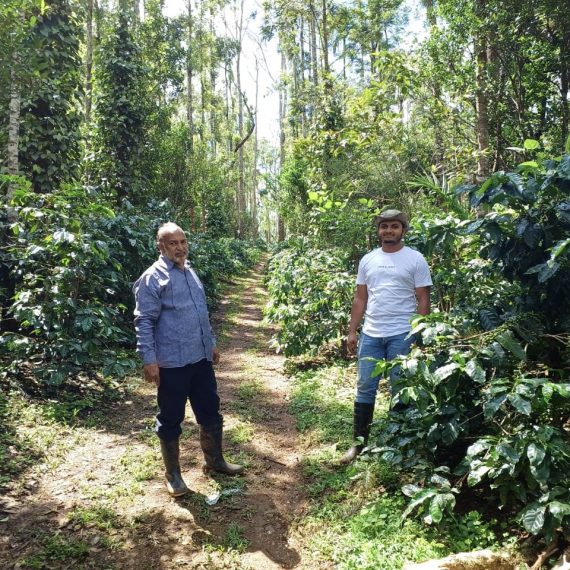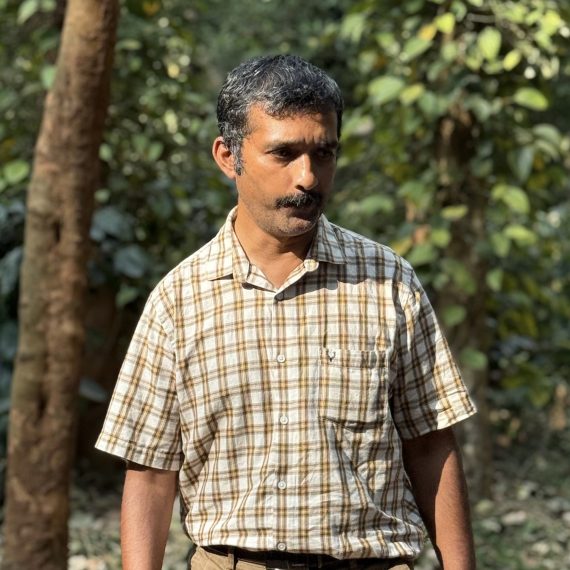
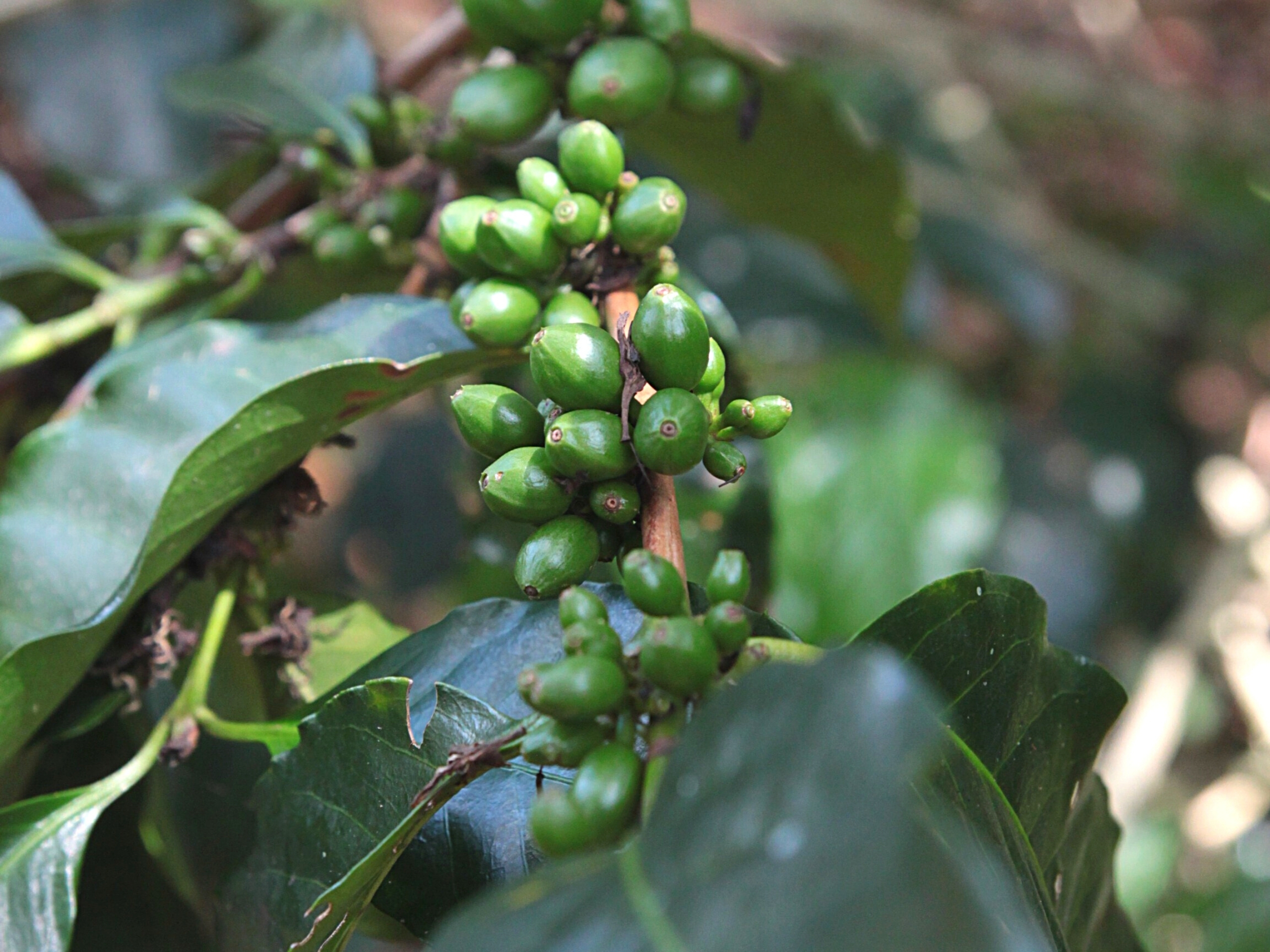
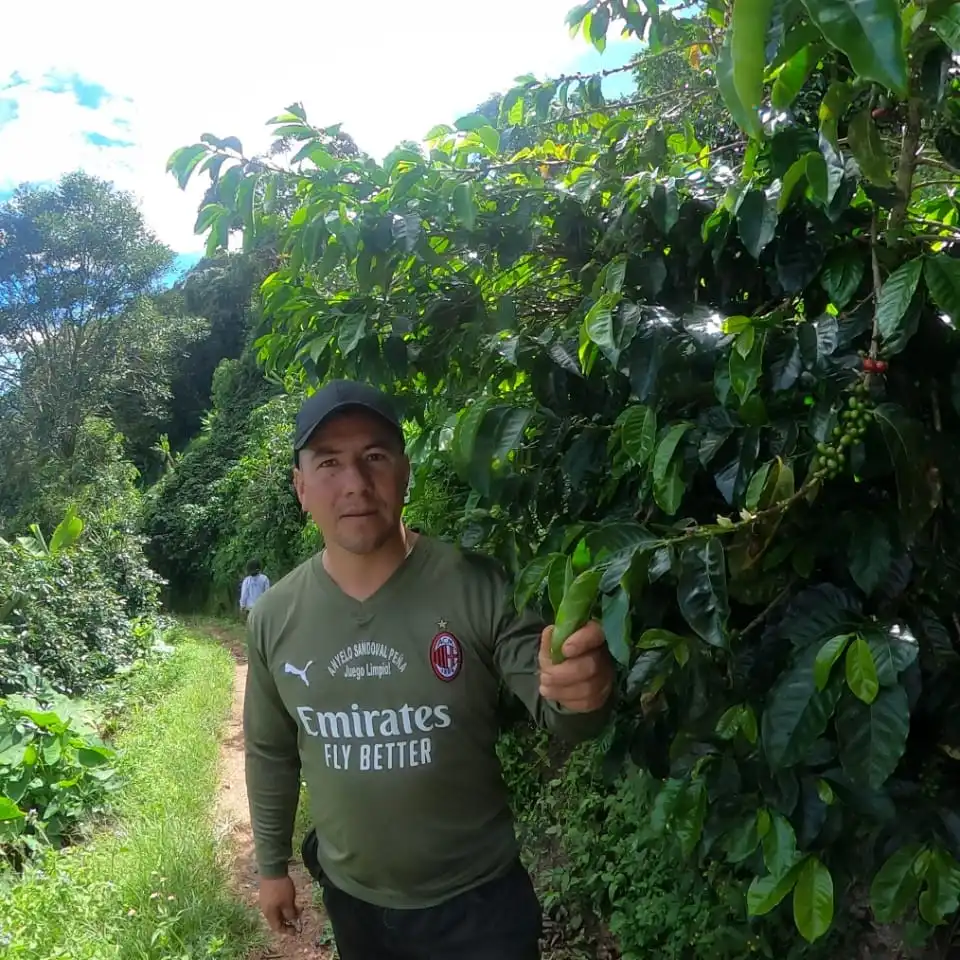
Henry Muñoz a Monica Berdugo


ZeměColombia
OblastHuila, Palesitna, municipality of Emaus
FarmaEl Cedro
Nadmořská výška1 650 m
Velikost farmy2 ha
Our family coffee farm has a 15-year tradition. I got into coffee growing thanks to my father, with whom I worked on the farm as a boy. I fell in love with this profession and continue it to this day. Together with my wife Mónica, we strive to constantly improve the farm and learn new things. We want to be a good example for our children and leave them a prosperous business.
Our production includes two main coffee varieties. We process Pink Bourbon in a quantity of approximately 2000 kg per year, with 40% harvested in mid-season and 60% during the main harvest. The second variety is Maracaturra, with an annual production of about 4500 kg, of which 35% is harvested in mid-season and 65% during the main harvest. Both varieties are processed using the traditional washed method, which helps preserve the typical flavor characteristics of our region.
A major change in our approach to coffee growing came after meeting Carlos Muñoz from Ricordi Coffee Co. Thanks to his advice and guidance, we started focusing on the production of specialty coffees. This transition meant a 180-degree shift in our traditional way of growing coffee. We are grateful for this opportunity and happy to present our exceptional coffee today.
Now I am working with new varieties, enjoying the differences between them, and experimenting with planting new trees. Besides new varieties, we are also interested in soil nutrition and how it affects coffee quality. So I would say that our main task is to ensure good nutrition for our coffee plants. The entire family participates in the harvest. We carefully select coffee cherries and process them with care in our family circle.
Farmers:
Mónica Berdugo
I come from a farming family. I grew up among coffee trees and as a child, I used to go pick coffee with my grandfather. I would climb bamboo to reach the highest cherries on the trees. I have spent my entire life on coffee farms.
Now I learn the most through our daily work with coffee from all the people around me and especially when we evaluate and taste every lot of coffee we grow.
Henry Muñoz
I have worked with my father on a coffee farm all my life, which is why I wanted to continue in this profession. Most of my knowledge came from my dad over the many years we worked together. Now, with my family, I continue this beautiful craft that my father taught me and left me as a legacy.
Now we focus on growing specialty coffee. Our processing is not scientifically complex, but we put a lot of love, dedication, and effort into doing things well. We mainly process coffee using the washed method with traditional fermentations to highlight the natural profile of each variety.
O kávě
Everything on the farm is done naturally and with care. The family avoids using yeast, thermos, fruits, or sugars during processing, ensuring the coffee’s flavor remains pure and authentic. Soil nutrition is a key focus, as the family continues to learn how to bring out the best in their coffee trees.
The harvest is a special time, bringing the whole family together. Each coffee cherry is hand-picked with care, ensuring only the best make it through. The result is a coffee that doesn’t just taste good—it tells the story of the land, the family, and their shared love for coffee.
CO-25-135
Henry Muñoz Pink Bourbon H
Variety: Pink Bourbon
Process: Honey
After harvesting coffee cherries at optimal ripeness, they are packed in bags to prevent contamination during transport to the farm where processing takes place. In the bags, the coffee is left to ferment for 24 hours. Subsequently, the cherries undergo floating, during which defective fruits are removed, and then they are depulped. The coffee is packed in bags and fermented for another 72 hours in mucilage. After fermentation, the coffee is transported to the drying facility, where it is regularly stirred during drying. The drying process takes 24 to 30 days depending on climatic conditions.
CO-25-136
Henry Muñoz Maracaturra W
Variety: Maracaturra
Process: Washed
After harvesting coffee cherries at optimal ripeness, they are left for 24 hours in bags. Subsequently, they undergo floating, during which defective fruits are removed, and then they are depulped. The coffee is left to ferment for 36 hours in tanks with minimal water. After fermentation, another 36 hours of fermentation follows, then the coffee is washed and transported to the drying facility. During the first days of drying, the coffee is intensively stirred to lose moisture more quickly. The drying process takes 15 to 20 days depending on climatic conditions.
CO-26-020
Henry Muñoz Pink bourbon W
Variety: Pink Bourbon
Process: Washed
We harvest only ripe coffee beans by hand. The coffee is then transported to a processing plant, where it is washed and packed into bags in the form of cherries and left for 24 hours. The coffee is then stripped of its pulp and left to ferment for 48 hours in a tank with a small amount of water. The coffee is then washed and moved to the drying room. On the first day, the coffee is stirred intensively several times to lose moisture as quickly as possible. The drying process takes 20 to 25 days, depending on climatic conditions. When the coffee is dry, it is collected in tulas bags and left to stabilize before samples are delivered.
CO-26-021
Henry Muñoz Maracaturra W
Variety: Maracaturra
Process: Washed
We hand-harvest only ripe coffee cherries. The coffee is then washed and left in cherry form in bags for two days. Then the coffee is depulped and left in mucilage in bags for another two days. Subsequently, the coffee is washed and moved to the drying facility. During the day, the coffee is intensively stirred several times to dry as quickly as possible. The drying process takes 20 to 25 days depending on climatic conditions. After drying, the coffee is packed in bags and left to stabilize before the samples are delivered.